Which features should I look for ?
You've been looking forward to having a piano in your home and making music a part
of your life. You're ready to buy a piano. How will you decide which instrument is
best for you?
A piano is many things - an instrument, a fine piece of furniture, an object of sentimental
value and a long-term investment that yields musical dividends. Keep in mind that
you'll be listening to and looking at your piano for a long time. The average lifetime of a piano spans decades, and you will probably own it long after you've sold
your present furniture, house and car.
So buy the best piano you can afford. Don't economize on a piano, especially for a
child who's starting lessons. Making music on a quality instrument is one of the
best ways to keep your young pianist interested.
the grand piano action
Which Type Of Piano Is For You?
Upright Pianos
-
The Spinet
piano was first produced in 1935. Its low cost and reduced height, between 35" and
39" (89-100cm), made it a popular choice after World War II.
- Console
pianos are 40" to 43" (102-110 cm) tall. This means longer strings and a larger soundboard that
improves the tone. Generally, the larger the piano, the better the tone.
- Studio pianos
from 45" to 48"(114-122 cm ) tall are often found in schools, studios and, increasingly, living
rooms. The string lengths and soundboard size are comparable to those of small grands.
- Professional
upright pianos are those ranging in height from 49" to 52" (124-132 cm) and offer the most power
and tone in a vertical piano.
Grand Pianos
Grand
pianos designed for home use have enjoyed an increase in popularity in recent years. They start at under five feet (152
cm). If space is a major consideration, use a paper pattern on the floor to measure - you may be pleasantly surprised to
find you have room for a larger piano! The curved shape of the grand piano helps with the flow of a room and often means
that the instrument is easy to accommodate in the room layout. Five and a half foot grands (1.68 cm) have a richer tone.
Six foot grands (183 cm) are a popular choice for piano teachers and serious amateurs. The largest grands in the seven
to nine foot category (213 - 274 cm) are used primarily for public performance, and are found in concert halls, churches
and auditoriums.
The Piano Inside And Out
A piano is a marvel of engineering and depends on top-quality materials, impeccable
craftsmanship and unflagging care to produce good music. The piano has profited greatly
in tone and performance as a result of technological improvements, and modern pianos are far superior in many ways to their predecessors.
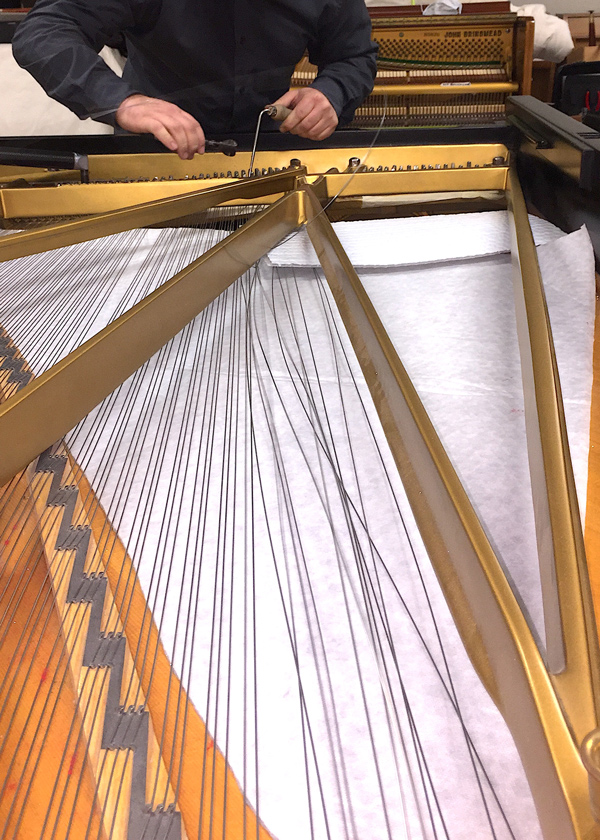
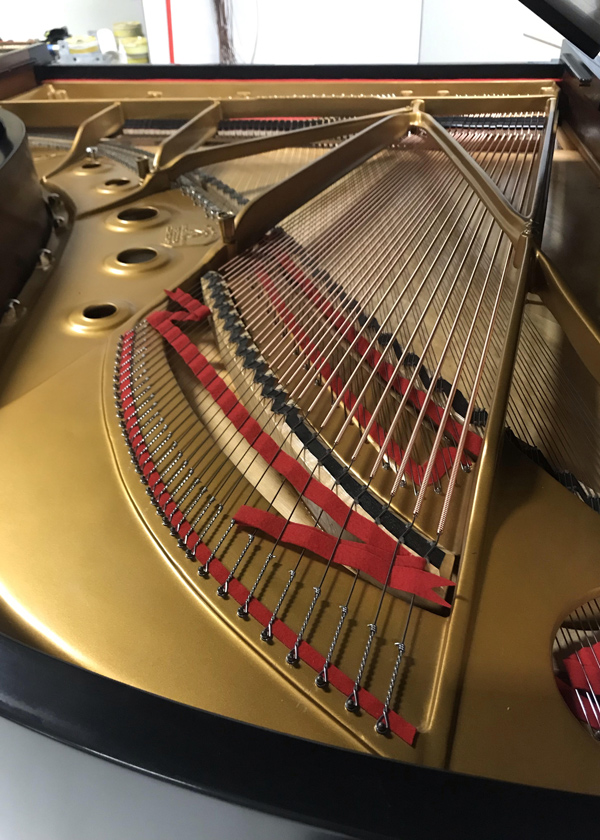
Piano strings
are made of high grade steel drawn to exact sizes. The bass strings are wound with
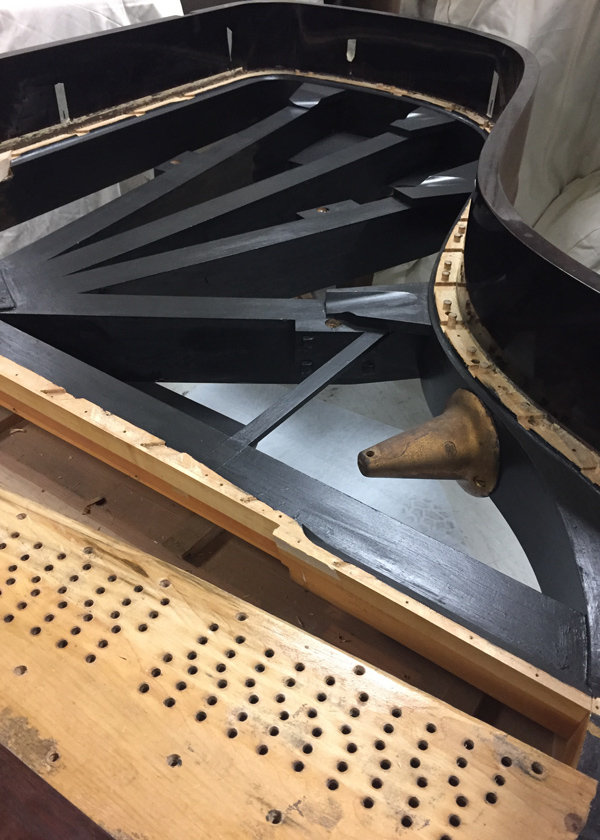
copper or copper-clad wire to add mass for lower tones. The plate is made of cast
iron and bolted to the frame. It anchors most of the 20 tons of pull exerted by the
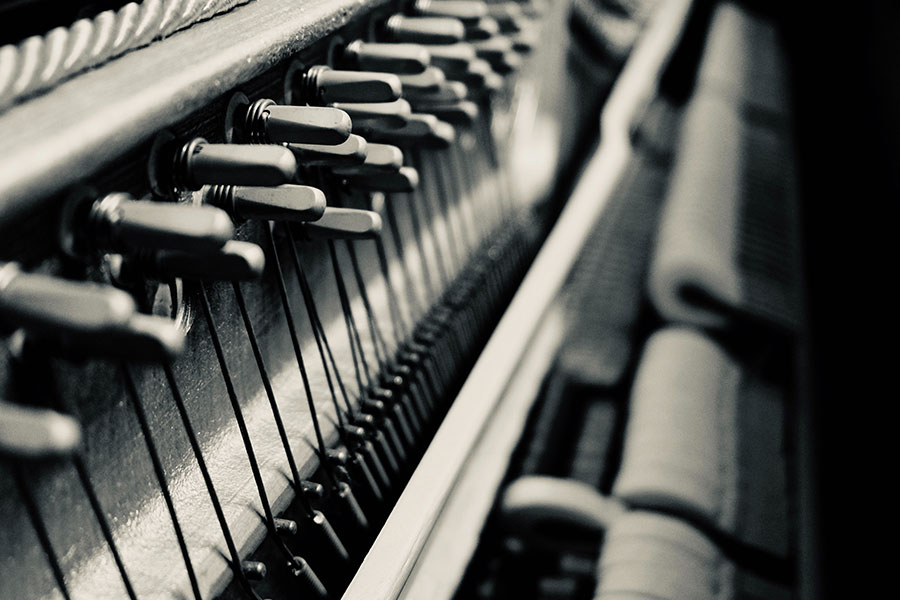
taut strings. At the top of the plate, the strings are wound through and around tuning pins.
These are set into the pin block, constructed of layers of carefully seasoned hard
wood which grips the pins in place for better tuning stability.
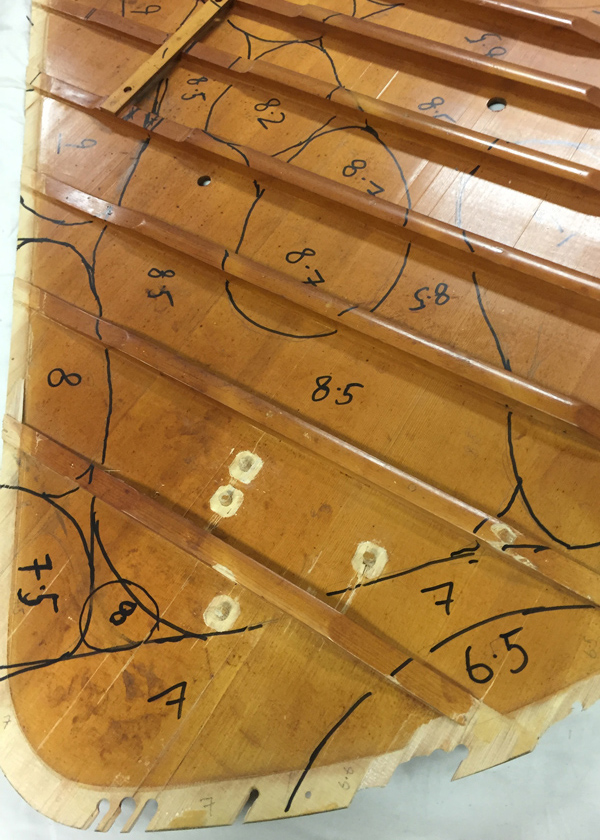
The soundboard
amplifies the vibrations of the strings. It is made of fine, straight grain spruce (grow in cold or mountainous regions)
in top-quality instruments. The hard maple treble and bass bridges transfer
the vibrations of the strings to the soundboard. These assembled components are called
the strung back.
The playing mechanism of the piano is called the action:
As many as 9,000 parts play a role in sending the hammers against the strings when
the keys are struck. Grand pianos have horizontal actions, and upright pianos have
vertical actions. Grand pianos have a so-called "double repetition" action, made possible by the intricate design of the
wippen:

Piano hammers
are made from sheets of felt molded around a wooden hammer under tremendous pressure.
A 12-pound hammer refers to the weight of a sheet of felt used to make the hammer,
not the weight of the hammer itself. The shape of the hammer and the density of the felt have a crucial impact on the quality
of the tone. Older hammers may need re-shaping, and the tone of both older and new pianos can nearly always be improved
by "voicing" in the hands of a skilled technician.
Today, piano keys
are almost never made from ivory. Instead, piano manufacturers use a fine molded
resin that won't crack or turn yellow. The keys are generally white, but some manufacturers add more natural looking off-white
colour or even imitation ivory grain. The black keys used to be made of the now rare ebony wood, but are these days
made of a synthetic material - sometimes lightly textured to prevent fingers slipping. Each key is balanced by a center
pin and "bushed" with
fine wool for proper clearance and quiet operation.
Pianos may have two or three pedals
. The sustaining, or damper pedal on the far right lifts the dampers away from the
strings so that the notes will continue to sound after the keys are released. The
pedal on the left is the "soft" pedal and reduces the tone by shortening
the distance the hammers travel in uprights. In grands this pedal is called the "una corda" and causes the action
to shift slightly so fewer strings are struck. Most grand pianos and some uprights have a third pedal called
the "sostenuto".
It sustains selected notes at the pianist's discretion, allowing for more subtle damping techniques. On upright pianos
the third pedal is generally used for for activating a practice mute.
|